
Table of Contents
- How We Chose the Best Peel and Stick Wallpaper Brands
- Top Peel and Stick Wallpaper Brands at a Glance
- Peel-and-Stick Wallpaper Reviews: What to Look For
- Peel-and-Stick Wallpaper Durability and Long-Term Performance
- Peel-and-Stick Wallpaper for Bathrooms: What Actually Works
- How to Install Peel-and-Stick Wallpaper Without Bubbles
- Cost, Coverage, and Rental Considerations
- Conclusion
- Frequently Asked Questions
Last Updated: October 17, 2026
How We Chose the Best Peel and Stick Wallpaper Brands
Finding the best peel and stick wallpaper brands starts with one filter: does the adhesive actually hold without wrecking the drywall? We built this guide from over 30 years of sourcing experience at Factory Direct Wallpaper. Our criteria are simple. We weigh material construction, how cleanly a roll removes, pattern repeat accuracy, and whether a brand’s stated coverage matches reality. We also factor in scratch resistance and cleanability, because a wall covering that scuffs in a hallway is a bad buy no matter how good it looks in photos.
Top Peel and Stick Wallpaper Brands at a Glance
The best peel and stick wallpaper brands cluster into three tiers: premium poly-woven fabric, mid-range vinyl, and budget paper-backed rolls. Here’s how the categories compare before we dig into reviews.
| Brand Tier | Material | Best For | Removal | Price Level |
|---|---|---|---|---|
| Premium | Poly-woven fabric | Bedrooms, rentals | Clean, low residue | Higher |
| Mid-range | Vinyl | Bathrooms, kitchens | Good, some residue | Moderate |
| Budget | Paper-backed | Short-term accents | Variable | Lowest |
Premium poly-woven rolls cost more but remove cleanly and resist tearing during installation. Mid-range vinyl handles moisture better. Budget paper-backed options work for a quick accent wall but rarely survive a second move. Pricing depends on roll size and pattern, so check current prices on our site before you commit.
Peel-and-Stick Wallpaper Reviews: What to Look For
Reading peel-and-stick wallpaper reviews is mostly an exercise in filtering noise. Most reviewers rate a product on day one, before adhesion, seams, or sun exposure get tested. The reviews worth trusting mention the wall surface, how long the paper stayed up, and whether removal left residue. A common mistake is buying based on a thumbnail: a botanical print that looks crisp online can show visible pattern seams on a wide wall. Look for reviewers who state their wall type, because smooth walls and lightly textured walls behave very differently under the same adhesive. Sample first. Always.
Material and Construction
Material and construction decide almost everything else about a roll. Poly-woven fabric is a self-adhesive wall covering with a woven backing that resists stretching and tears cleanly at the cut line. Vinyl is thinner, more water-resistant, and easier to wipe down, but it can stretch if you pull too hard during application. Paper-backed rolls are the cheapest and the least forgiving. Thicker material hides wall imperfections; thin material telegraphs every bump. If your wall has texture or patching, weight matters more than pattern.
Adhesion and Repositionability
Adhesion and repositionability are where cheap rolls separate from good ones. A repositionable adhesive lets you lift and re-seat a strip during installation without losing grip. Low-quality adhesive grabs instantly and then fails weeks later, usually at the corners. In practice, the difference shows up in the first week: quality rolls hold tight after a light press, while weak ones need constant smoothing. Test a small strip on an inconspicuous spot for 24 hours before committing to a full wall.
Peel-and-Stick Wallpaper Durability and Long-Term Performance
Peel-and-stick wallpaper durability depends on three things: adhesive quality, wall preparation, and where you hang it. But the question most buyers actually have is what happens two or three years later, when the paper comes down. That long-term removal outcome is where brands separate, and it is the part most reviews never test.
Long-Term Performance and Removal Outcomes
A roll that holds for a year and then removes cleanly is a better buy than one that holds for three years and takes the paint with it.
Test removal before you commit to a full wall. Apply a strip to an inconspicuous spot, leave it for a week, then remove it slowly at a low angle, pulling parallel to the wall rather than straight out.
Sun exposure fades ink over time, so south- and west-facing walls need a light-resistant print. The single biggest durability mistake is skipping surface prep.
Wall-Finish Compatibility and Patch Testing
Not every wall accepts peel-and-stick equally. Smooth, fully cured paint is the ideal surface. Glossy paint benefits from a light scuff to help the adhesive bite. Matte and flat paints are more porous and can bond too aggressively, which makes removal riskier. Freshly painted walls need 30 days or more to cure before any adhesive goes on.
Patch testing is the only reliable way to know. Apply a small square, press firmly, wait 24 to 72 hours, then remove slowly. Note whether the paint lifts, whether residue remains, and whether the surface texture telegraphs through the paper.
Scratch Resistance and Cleanability
Scratch resistance and cleanability vary widely by material, and this is where vinyl earns its place. Vinyl wall covering wipes clean with a damp cloth and tolerates gentle scrubbing, which suits hallways, kids’ rooms, and kitchen backsplashes. Poly-woven fabric cleans well but needs a lighter touch. Paper-backed rolls are the least washable and will pill if you scrub them. For high-touch zones, choose a washable vinyl and test any cleaner on a scrap piece first.
Keep a spare offcut from each roll. When a scuff appears, a matching patch cut from the same pattern repeat blends in far better than a cleaner ever will, and you’ll have the exact dye lot.
A Simple Scoring Rubric for Long-Term Value
When comparing brands, score each on five factors: adhesion after one week, repositioning without loss of grip, seam visibility after one month, cleaning after a scuff, and removal residue after a patch test. A brand that scores well on all five is worth a premium. A brand that wins on price but fails removal is a false economy, because the cost of repainting a wall usually exceeds the savings on the roll.
Peel-and-Stick Wallpaper for Bathrooms: What Actually Works
Peel-and-stick wallpaper for bathrooms works only when the paper stays out of direct water contact and the room ventilates well. Vinyl is the right material here because it resists moisture and wipes clean. Place it on vanity walls or accent areas, not inside a shower surround. Run the exhaust fan during and after showers to control humidity, and press seams firmly at installation. If a corner lifts, re-seat it immediately rather than waiting, because moisture travels under a loose edge fast.
How to Install Peel-and-Stick Wallpaper Without Bubbles
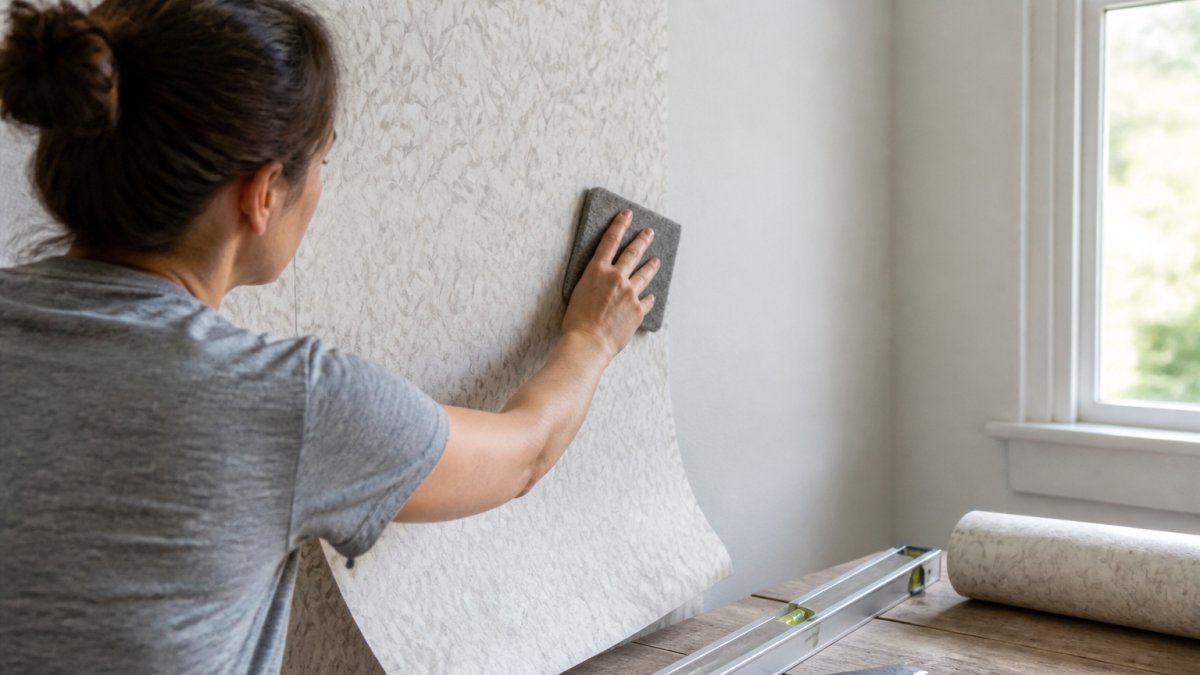
Bubble-free installation comes down to a smooth, clean wall and slow, even pressure. Work in small sections, smooth from the center outward, and never stretch the paper to force a fit. Here’s the sequence that works.
- Clean the wall and let it dry fully
- Measure the wall height and add a few centimeters of trim allowance
- Mark a vertical plumb line with a level
- Peel a short section of backing and press from the center out
- Smooth with a felt tool, chasing bubbles to the nearest edge
- Trim top and bottom with a sharp blade
- Overlap or butt seams according to the pattern repeat
Wall Surface Preparation
Wall surface preparation decides whether the job lasts. Wash the wall with a mild cleaner, rinse, and let it dry completely. Patch holes and sand them flush. On glossy paint, a light scuff helps the adhesive bite. Smooth walls are ideal; lightly textured walls can work with a heavier material, but skip heavily textured or freshly painted surfaces until the paint cures.
Seam Alignment and Pattern Repeat
Seam alignment and pattern repeat trip up more first-timers than bubbles do. Check the pattern repeat on the roll label and buy extra to match it across drops. Butt seams tightly on a straight pattern; overlap slightly on a busy one if the manufacturer allows. Stand back after each drop to check alignment before pressing the full strip down.
Cost, Coverage, and Rental Considerations
Total project cost depends on coverage, not sticker price, and the gap between a cheap roll and a premium one narrows fast once you account for pattern-repeat waste. Here is how to calculate a realistic budget before you buy.
Coverage Math That Matches Real Rooms
Start with wall height times width, subtract doors and windows, then divide by the roll’s stated coverage. Most residential peel-and-stick rolls list coverage in square feet on the label, and the stated number assumes a straight match with no waste.
Pattern repeat changes the math. A straight match with a 24-inch repeat can waste 15 to 25 percent of each roll on a wall taller than the repeat interval. A random match wastes almost nothing.
What Samples Actually Cost
Most brands sell sample swatches for a few dollars each, and the cost is almost always credited toward a full order. Order samples from every brand you are seriously considering, tape them to the actual wall, and check the color under both daylight and evening lighting. A sample that looks right in the store can read green or gray on a north-facing wall. Budget for three to five samples per room, which is a small line item compared with a mid-wall dye-lot mismatch.
Rental-Specific Decision Guide
For renters, the decision guide is short but specific. Most leases prohibit nails and permanent adhesives but are silent on removable wall coverings, so get written approval if the language is ambiguous.
A common pattern among renters is to skip the patch test on freshly painted walls. New paint needs 30 days or more to cure fully, and adhesive applied before cure can pull the paint film when removed. If your unit was recently painted, wait, or choose a lower-tack product and test first.
Total Project Cost Checklist
- Measure each wall and subtract openings
- Check pattern repeat and add 15 to 25 percent overage
- Order samples and test on the actual wall
- Confirm lease terms and photograph existing wall condition
- Budget for a smoothing tool, sharp blades, and a level if you do not own them
Skipping the overage allowance is the most common budget mistake. Running short mid-wall means a new dye lot that may not match, and a mismatched final drop is visible from across the room.
Conclusion
The hardest part of buying peel and stick wallpaper isn’t choosing a pattern. It’s trusting that a roll will hold, remove cleanly, and look right in your actual room. Factory Direct Wallpaper carries designer wall coverings at factory closeout prices, backed by over 30 years of sourcing experience, 24/7 customer support, and free ground shipping on orders over $750. Start with samples, measure carefully, and shop with confidence. Get started with Factory Direct Wallpaper and transform your space without the guesswork.
Frequently Asked Questions
Is peel and stick wallpaper good for renters?
Yes, for many renters it is a practical option because most quality brands are designed to remove cleanly without damaging paint or drywall. Success depends on the wall surface: smooth, fully cured painted walls work best. Avoid freshly painted walls (wait at least 30 days), textured surfaces, and areas with peeling paint. Always test a small piece in an inconspicuous spot first. If you follow the brand’s removal instructions, peel and stick wallpaper can be a low-risk way to personalize a rental.
Can I use peel-and-stick wallpaper in my bathroom?
You can, but placement matters. Choose a brand labeled water-resistant and avoid direct water contact areas like inside shower stalls. Apply it to smooth, dry walls away from splashing, and make sure the bathroom has good ventilation to prevent moisture buildup behind the paper. Peel-and-stick wallpaper for bathrooms works best as an accent above vanities or on powder room walls. If the room stays damp, traditional wallpaper or paint may hold up better long term.
How long does peel and stick wallpaper last?
Most quality peel-and-stick wallpapers last three to five years indoors when applied to properly prepared walls. Durability depends on the material, sun exposure, humidity, and how well the edges are sealed. Brands using poly-woven fabric or thicker vinyl tend to resist scratches and fading better than thin paper-backed options. In bathrooms or kitchens, expect a shorter lifespan unless the product is specifically rated for moisture. Proper installation and smooth walls extend the life significantly.
Does peel-and-stick wallpaper damage walls when removed?
Reputable brands are designed to remove without leaving residue or tearing paint, but damage can happen if the wall wasn’t prepped or the paper stayed up too long. Remove slowly at a low angle, and use a hairdryer on low heat to soften adhesive if needed. Walls with peeling paint, unprimed drywall, or fresh paint are more likely to sustain damage. Testing a small strip first and following the manufacturer’s removal guidance greatly reduces the risk.